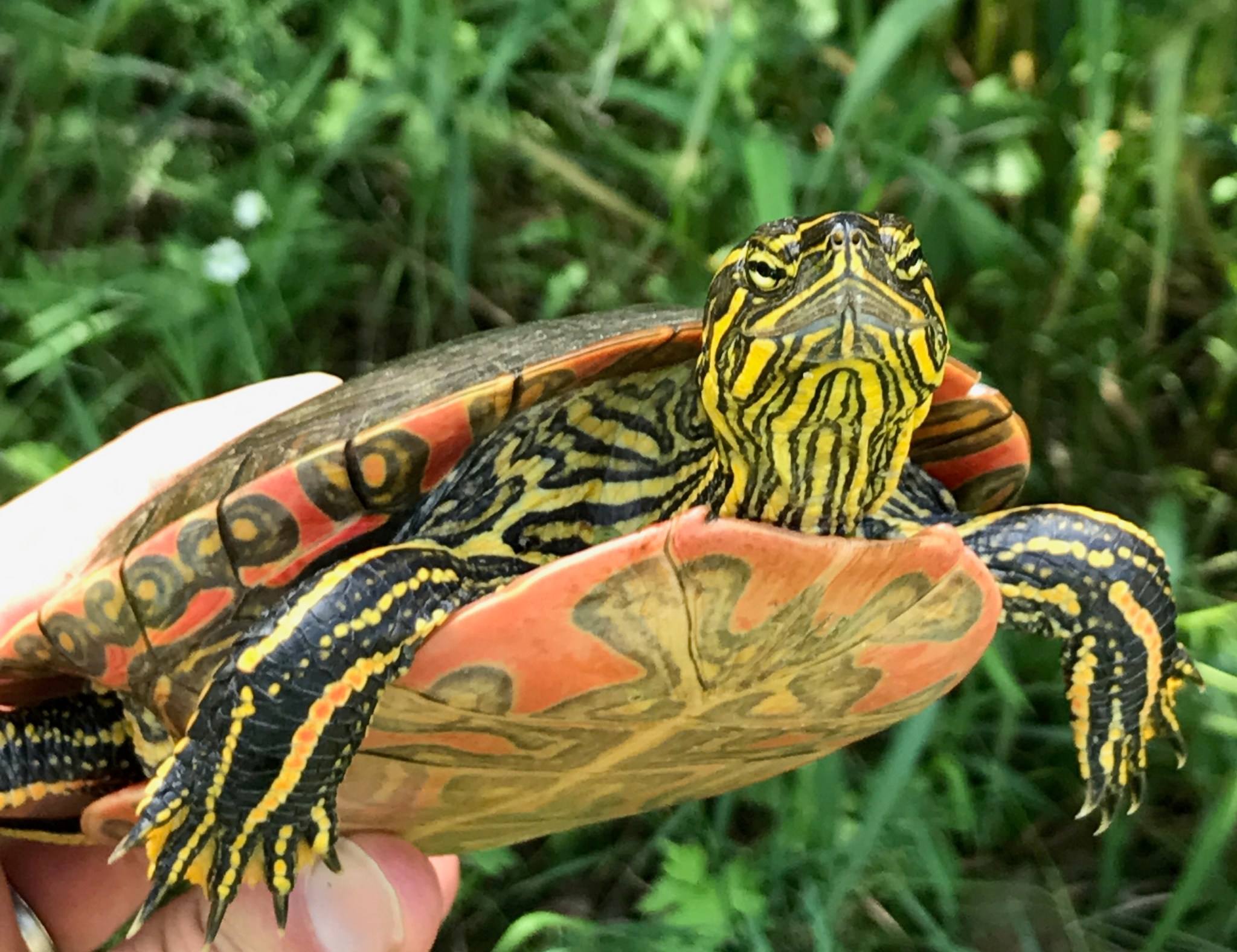
The painted turtle, Chrysemys picta, is the most anoxia-tolerant tetrapod known to science. In the complete absence of oxygen, adult painted turtles survive more than 170 days at 3°C and for more than 30 hours at 20°C. Our overall goals are to identify the specific mechanisms that enable this ability, to determine their uniqueness compared to other animal species, and to assess their applicability to human and animal diseases or management of ecosystem health.
Painted turtles experience anoxia while overwintering in ice-covered ponds.

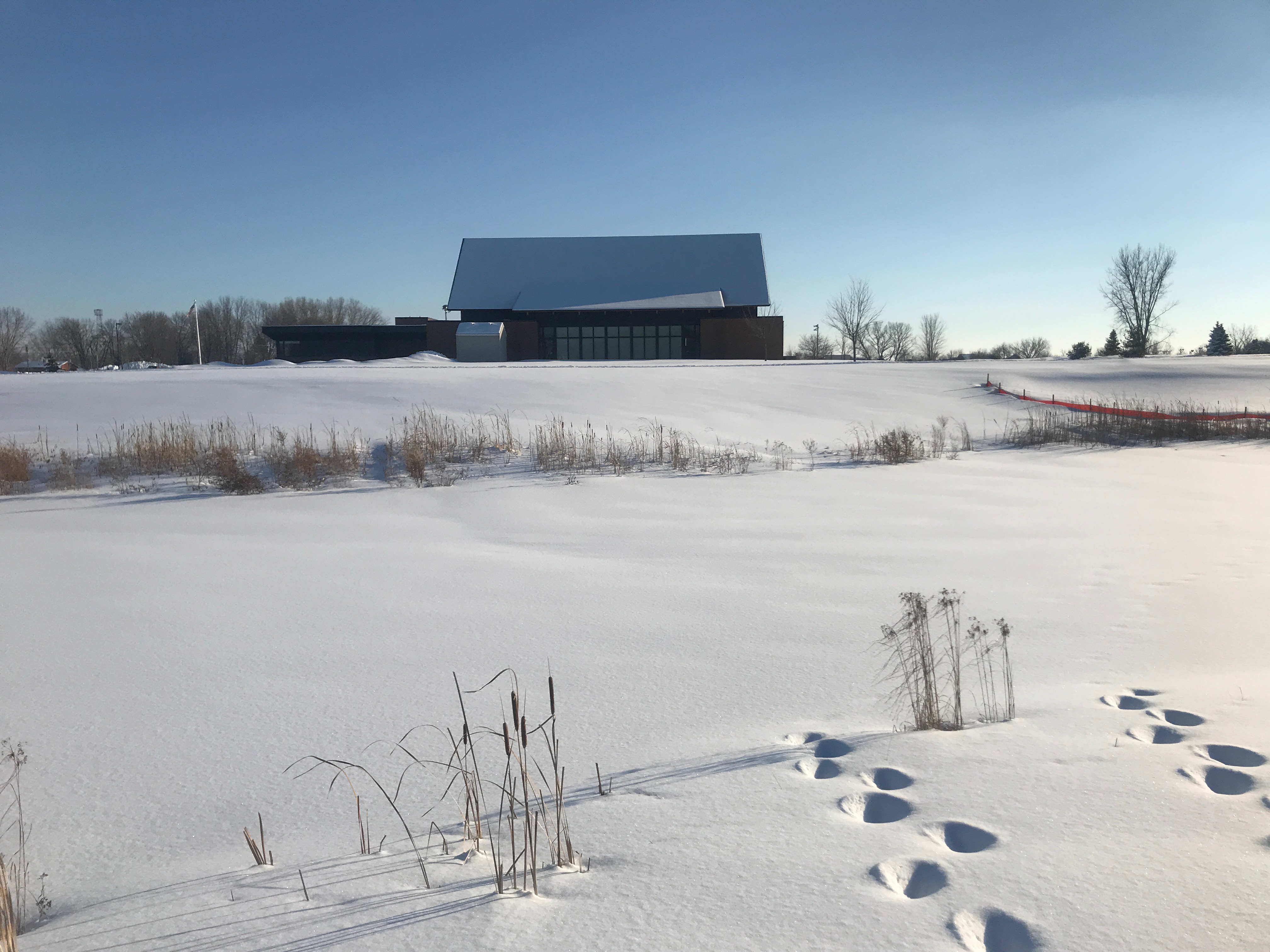
In places like Minnesota, Michigan, and Wisconsin, ponds and marshes that normally team with painted turtles typically become iced-in by the end of December. The turtles that live in the lakes become trapped under the ice, without access to air, until the ice thaws, sometimes not until April or May. If there were oxygen in the water, the turtles could take it up by diffusion across their skin, but they usually find themselves on or within the muddy pond bottom, where there is little or no oxygen. The result is that painted turtles routinely experience extended periods of oxygen deprivation in nature that can last for 2-3 months.
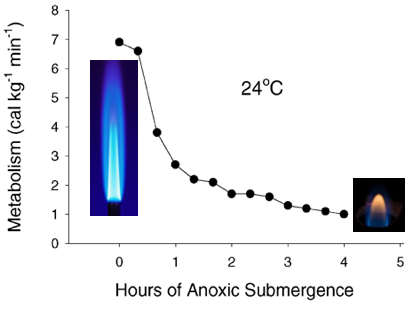
The painted turtle’s anoxia tolerance stems from three basic physiological mechanisms. First, and most important, is that the turtles show a metabolic suppression of close to 90% when anoxic. This allows the turtles’ energy demands to be met entirely by metabolic pathways that do not require oxygen. These pathways differ in different groups of animals. In vertebrates, that pathway is glycolysis, which can only proceed without oxygen if lactate is produced.
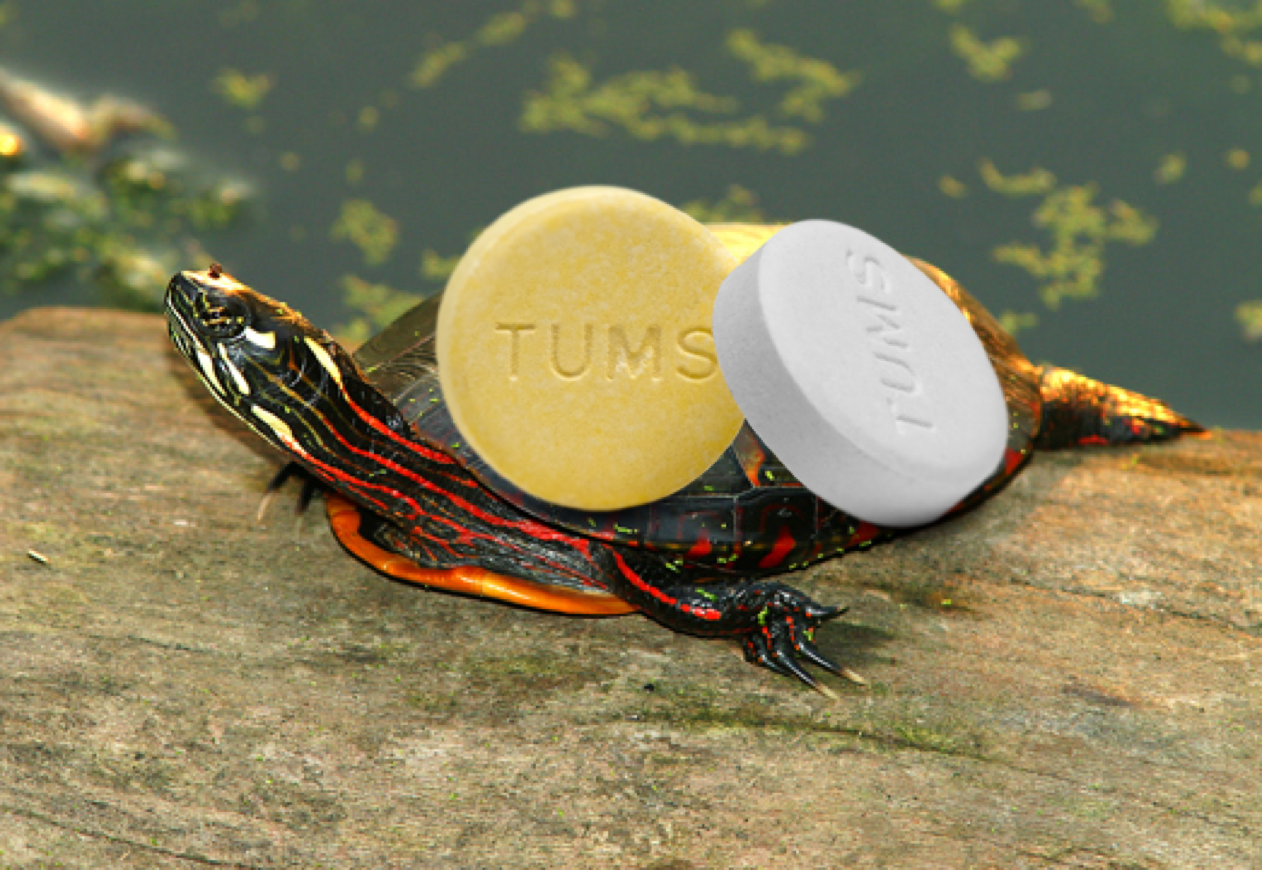
Lactate accumulates in the turtle with a proton, producing what has come to be known as a lactic acidosis. If this lactic acid builds up too much in animals, it can acidify its body fluids to the point that normal cellular processes break down, leading to death. Amazingly, the painted turtle uses carbonate buffer in its shell and skeleton to prevent this from happening by buffering more than five times the amount of lactic acid that would kill a human! To date, there is no vertebrate known to science with bone more enriched with carbonate than the painted turtle!
The third and final adaptation is related to metabolic fuel. Without oxygen, a turtle can only harvest energy from sugars that are stored in its tissues; it cannot use fats. Like other vertebrates, turtles store sugars in its tissues as glycogen. The liver, which is unusually large in turtles, is also very rich in glycogen. In fact, at certain times of the year, it is 10% glycogen by mass. These large fuel stores allow painted turtles to rely on glycolysis for energy production far longer than every other turtle species known to science.
 The Warren Lab